What to Wear When Riding a Motorcycle in the Cold: The Ultimate Guide
Riding a motorcycle in cold weather presents unique challenges that go beyond simple discomfort. As temperatures drop, your body loses heat 25 times faster at 60mph than in still air, making proper gear essential for both safety and enjoyment. This comprehensive guide explores scientifically-backed layering strategies and specialized equipment designed to keep you protected from wind chill, moisture, and freezing temperatures. With a special focus on hand protection - the most vulnerable area for riders - we'll examine how innovations like heated motorcycle gloves revolutionize winter riding.
Key Insight: At highway speeds in 40°F (4°C) weather, wind chill can make it feel like 18°F (-8°C). Below 50°F (10°C), your hands lose dexterity rapidly, increasing accident risk by up to 30% according to motorcycle safety studies.
The Science of Cold Weather Riding
Understanding the physics of body heat loss is crucial for selecting effective gear. The three primary mechanisms affecting riders are:
Convection: The Invisible Threat
As air moves across your body at speed, it strips away your protective warmth layer. At 70mph, wind chill values can be 30-40°F colder than ambient temperatures. This is why windproof outer layers are non-negotiable for winter riding.
Conduction: The Cold Transfer
Direct contact with cold surfaces (handlebars, seats) accelerates heat loss through conduction. This is particularly problematic for hands and seat contact points. Insulating barriers and heated elements counteract this transfer.
Evaporation: Moisture Management
Perspiration that can't escape turns cold against your skin. Modern moisture-wicking base layers move sweat vapor away from the body while thermal mid-layers trap warm air. Without proper moisture management, you risk hypothermia even in above-freezing temperatures.
The Complete Cold-Weather Gear System
Head and Neck Protection
A helmet liner or balaclava provides critical insulation where 10-15% of body heat escapes. Look for windproof neck gaiters that seal the gap between helmet and jacket.
Core Layering Strategy
The three-layer system is scientifically proven for thermal efficiency:
- Base Layer: Merino wool or synthetic moisture-wicking fabric
- Insulating Mid-Layer: Fleece or synthetic insulation (200-300g)
- Weatherproof Outer Shell: Armored jacket with waterproof membrane (minimum 10,000mm rating)
Lower Body Protection
Insulated overpants with full-side zippers provide versatility. Consider thermal liners with windproof panels on the thighs. For extreme cold, heated pants liners maintain core temperature.
Footwear Essentials
Waterproof motorcycle boots with Thinsulate insulation (400g+) prevent conductive heat loss through footpegs. Vapor barriers (plastic bags) over socks add surprising warmth in sub-freezing conditions.
The Critical Role of Hand Protection
Hands are particularly vulnerable to cold due to high surface-area-to-volume ratio and reduced blood flow during riding. When hand temperature drops below 50°F (10°C), reaction time slows by up to 20% according to ergonomic studies. This makes selecting proper winter motorcycle gloves a safety imperative.
Traditional Insulation Limits
Standard leather motorcycle gloves provide wind resistance but limited thermal retention below 40°F. Bulkier insulation compromises bar feel and control precision.
Heated Glove Advantages
Heated motorcycle gloves maintain consistent 95-110°F temperatures regardless of external conditions. Advanced models feature zoned heating across fingers, knuckles, and palms.
Seibertron's Technical Innovation
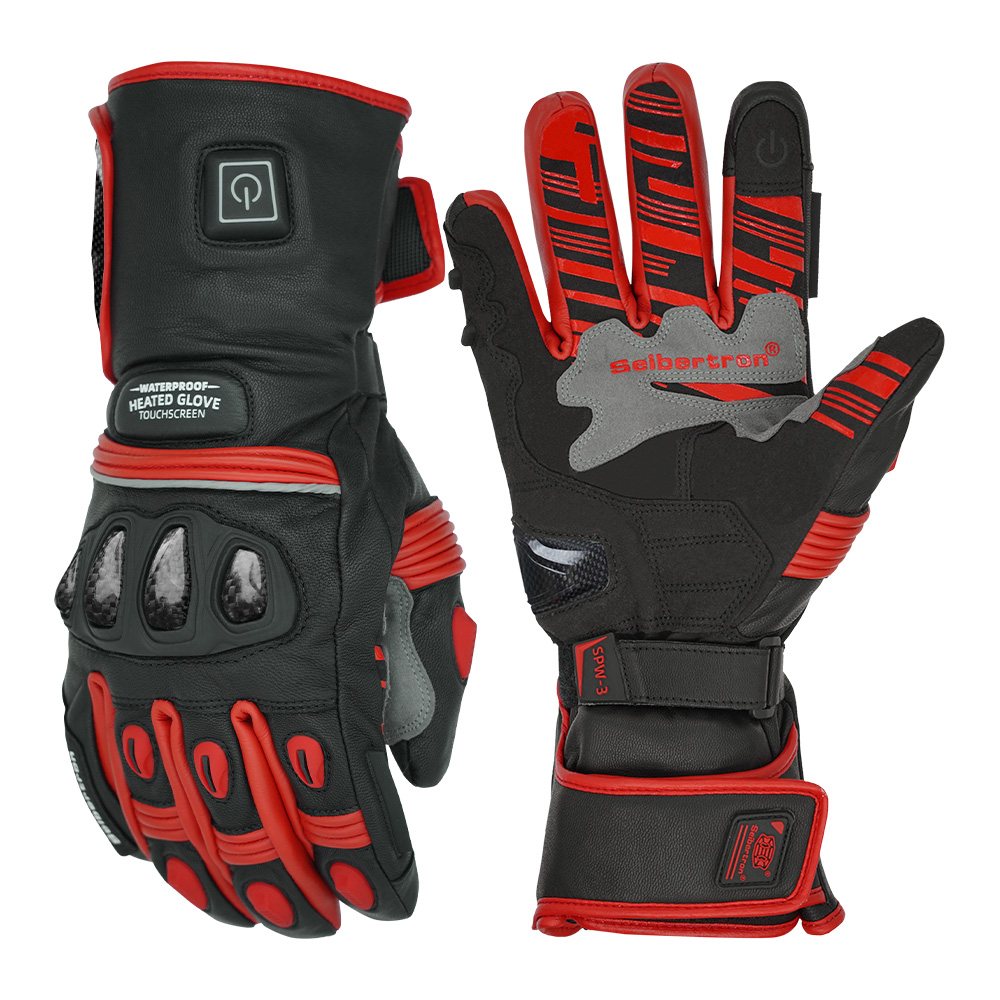
Our cold weather motorcycle gloves integrate carbon-fiber heating elements powered by ultra-thin 7.4V batteries providing 2.5-5 hours of adjustable warmth across three settings.
Seibertron Heated Gloves: Engineering Excellence
After rigorous testing in alpine conditions, Seibertron's heated biker gloves outperform competitors through:
- Reinforced palm sliders with impact protection
- Touchscreen-compatible index fingers
- Pre-curved ergonomic design reducing hand fatigue
- Dual-density armor on knuckles and scaphoid
Discover our full range of Seibertron winter motorcycle gloves engineered for extreme conditions.
Choosing Your Winter Gloves: Key Considerations
Selecting the best winter motorcycle gloves requires evaluating several factors:
Temperature Rating System
Match glove performance to your climate:
- 40-55°F (4-13°C): Insulated leather motorcycle gloves (200-300g insulation)
- 25-40°F (-4-4°C): Heated motor bike gloves with mid-level heating
- Below 25°F (-4°C): Premium heated motorcycle gloves with 360° heating elements
Waterproofing Technology
Look for breathable membranes (Hipora or equivalent) rather than coated fabrics. Seibertron's proprietary HydraShield technology offers 24-hour waterproofing without the "sweaty hand" effect.
Battery Performance Metrics
Evaluate batteries by:
- Watt-hour rating (aim for 15-25Wh)
- Recharge cycles (quality lithium batteries last 300+ cycles)
- Charging time (fast-charge capable preferred)
Advanced Cold-Riding Techniques
Beyond gear, strategic approaches enhance cold-weather safety:
The Pre-Warming Protocol
Activate heated biker gloves 10 minutes before riding. This prevents initial cold shock and maintains blood circulation.
Wind Management Tactics
Position handguards or aftermarket deflectors to create still-air pockets around controls. Combined with warm motorcycle gloves, this reduces heating power requirements by 40%.
Emergency Measures
When facing unexpected cold:
- Pull over safely
- Perform hand-windmill exercises to restore circulation
- Place hands against engine cases (with gloves on)
- Use chemical warmers inside glove cuffs
FAQs: Seibertron Heated Gloves
Can I wash my heated motorcycle gloves?
Remove batteries and handwash in lukewarm water with mild detergent. Never machine wash or dry. After washing, reshape and air dry away from direct heat. Apply leather conditioner annually if applicable.
What makes Seibertron gloves different from cheaper alternatives?
Unlike budget options, our best heated motorcycle gloves feature:
- Medical-grade heating elements (not wire coils)
- CE-certified armor protection
- Double-stitched stress points
- 3-year heating element warranty
Are these suitable for extreme cold below 0°F (-18°C)?
When paired with silk liner gloves, our ArcticPro model maintains functionality to -20°F (-29°C). We recommend heated grips as supplemental warmth at these extremes. Always monitor battery levels in severe cold.
Conclusion: Ride Warm, Ride Safe
Proper cold-weather riding gear transforms winter motorcycling from endurance test to enjoyable adventure. By implementing a systematic layering approach and investing in specialized equipment like Seibertron motorcycle gloves, you maintain critical dexterity and reaction capabilities regardless of temperature. Remember that effective hand protection isn't luxury - it's fundamental safety equipment when temperatures drop. As you prepare for your next cold-weather ride, prioritize gear that addresses the physics of heat loss while providing uncompromised control.
Final Tip: Always carry backup power for heated gear. An extra battery pack for your heated motorcycle gloves weighs less than 5oz but extends your warmth security significantly.
Explore Seibertron Winter Gloves Collection
Choose the riding glove that matches your route

S.P.S.G-3 Fingerless Cycling Gloves
Best starting point for shoppers comparing warm-weather riding gloves with UPF100+ sun protection, fingerless control, and outdoor sport use.
- UPF100+ sun protection
- Fingerless control
- Cycling-ready use
- Breathable outdoor feel
- Anti-slip handling
- Multiple sizes
S.P.S.G-3 Fingerless Cycling Gloves
For shoppers comparing riding and outdoor gloves by grip, airflow, sun coverage, control, and sport use.

G.A.R.G 2.0 Anti-Impact
For shoppers comparing riding and outdoor gloves by grip, airflow, sun coverage, control, and sport use.

Seibertron B-A-R PRO 2.0 Adult Baseball & Softball Batting Gloves - Super Grip
For shoppers comparing riding and outdoor gloves by grip, airflow, sun coverage, control, and sport use.

Seibertron Full Finger Padded Palm Lightweight Breathable Climbing Rope Gloves
For shoppers comparing riding and outdoor gloves by grip, airflow, sun coverage, control, and sport use.
Keep comparing before you choose
Read more riding glove guides
 How to Keep Hands Warm When Riding a Motorcycle in WinterRead article
 What to Wear When Riding a Motorcycle in the Cold?Read article
 How to Keep Hands Warm When Riding a Motorcycle in WinterRead article
 A Comprehensive Guide to Choosing the Best Brown Leather Motorcycle Gloves for MenRead article
 What is the 12 second rule on a motorcycle?Read article
 What is the Cheapest BMW Motorcycle to Buy?Read article
 How much does it cost to get a motorcycle license in VA?Read article
 What to Consider When Buying Motorcycle Gloves?Read article
 How to Make Leather Motorcycle Gloves Waterproof: The Ultimate GuideRead article
 Motorcycle Backpack Distributor Opportunities in 2026: How to Partner with SeibertronRead article