Cost vs. Quality: How B2B Buyers Can Optimize Motorcycle Gloves Procurement Strategy
In the competitive world of motorcycle apparel, the procurement of high-quality gloves presents a complex challenge for B2B buyers. The balance between cost efficiency and product quality is a delicate equation that can significantly impact profitability, brand reputation, and customer satisfaction. This comprehensive guide explores proven strategies to optimize your moto gloves procurement process while maintaining the perfect equilibrium between budgetary constraints and quality requirements.
For wholesalers, retailers, and distributors in the motorcycle gear industry, understanding the nuances of glove procurement is essential. From navigating the wholesale market to establishing relationships with reliable dropshipping suppliers, this article provides actionable insights to transform your procurement approach. We'll examine how to leverage bulk buying power, identify the top gloves factory partners, and select products that meet critical safety standards like CE certification.
Understanding the Motorcycle Gloves Market Landscape
The global motorcycle gloves market is projected to reach $1.8 billion by 2027, growing at a CAGR of 4.3% according to recent industry reports. This growth is fueled by increasing motorcycle ownership, rising safety awareness, and technological advancements in protective gear. For B2B buyers, navigating this expanding market requires strategic insight into various procurement channels.
Major Procurement Channels for Wholesale Supplies
B2B buyers typically source motorcycle gloves through several primary channels, each with distinct advantages and challenges. Traditional wholesale distributors offer established supply chains but may have higher markup. Direct partnerships with gloves manufacturing companies provide better pricing but require larger minimum orders. Emerging options like dropshipping suppliers offer inventory flexibility but less control over product quality.
Markets like the Yiwu Market in China represent significant sourcing hubs where buyers can access thousands of suppliers. While offering competitive wholesale price points, these markets require careful quality verification. Many professional buyers now combine channels - using wholesale stores for quick replenishment while developing direct relationships with a gloves factory near me for custom products.
Key Market Segments and Product Variations
The motorcycle gloves market features several specialized segments requiring different procurement approaches:
- Sport Motorcycle Gloves: High-performance models favored by sport bike riders, requiring advanced materials and construction
- CE Rated Motorcycle Gloves: Safety-certified products meeting European protection standards
- Full Gauntlet Motorcycle Gloves: Extended coverage designs offering maximum protection
- Lightweight Motorcycle Gloves: Breathable options for warm weather riding
- Short Motorcycle Gloves: Minimalist designs offering basic protection and maximum comfort
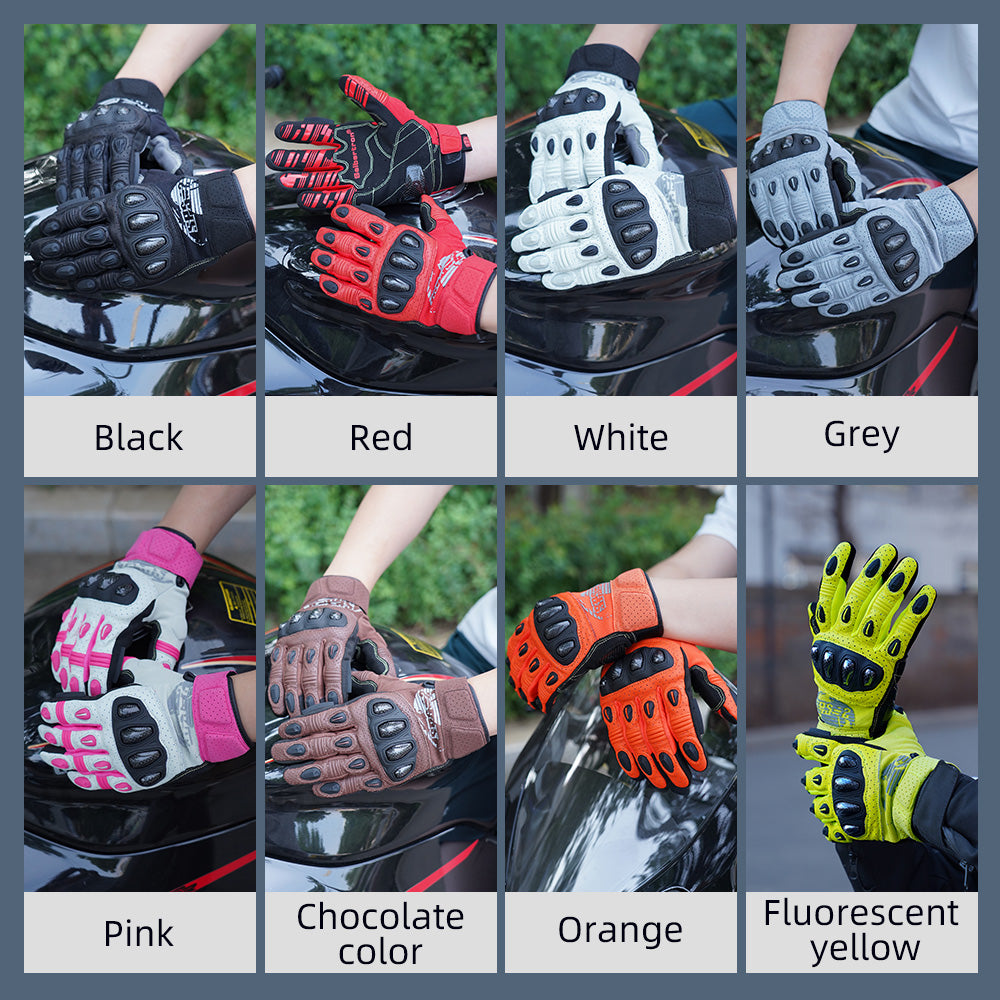
Specialized segments like gray motorcycle gloves or specific men's bike riding gloves often command premium pricing and require targeted sourcing strategies.
Balancing Cost and Quality Factors
The fundamental challenge in motorcycle gloves procurement lies in balancing cost considerations against quality requirements. This balance directly impacts your business profitability, customer satisfaction, and brand reputation. Understanding the key factors in each category is essential for developing an optimized procurement strategy.
Cost Considerations in Bulk Orders
Effective cost management begins with understanding the components that determine wholesale pricing:
| Cost Factor | Impact on Pricing | Management Strategy |
|---|---|---|
| Minimum Order Quantities (MOQs) | Higher MOQs typically lower per-unit costs | Combine orders with complementary products |
| Material Costs | Leather vs. synthetic materials create 30-60% price variance | Seasonal material purchasing |
| Shipping and Logistics | Can add 15-25% to landed costs | Consolidated shipping and FOB terms |
| Customization Requirements | Custom designs increase costs 20-50% | Standardize designs across product lines |
Quality Assessment Parameters
Quality evaluation extends beyond superficial inspection to technical and performance characteristics:
Material Quality: Assess leather grain, stitching density, and textile durability. Premium gloves often feature goatskin or kangaroo leather palms with reinforced high-abrasion zones.
Protection Level: For CE rated motorcycle gloves, verify certification authenticity through EN 13594:2015 standards. This certification ensures impact protection, abrasion resistance, and seam strength testing.
Ergonomic Design: Quality gloves feature pre-curved finger construction, articulated knuckle protection, and strategic ventilation placement.
Durability Testing: Reputable gloves manufacturing companies conduct accelerated wear testing, simulating thousands of hours of use.
Specialized Features: Evaluate additional value elements like touchscreen compatibility, waterproof membranes, or thermal insulation in premium models.
Optimizing Procurement Strategy
Developing an effective procurement strategy requires a systematic approach to supplier selection, order management, and quality assurance. The following framework provides a comprehensive methodology for optimizing your motorcycle gloves sourcing operations.
Supplier Selection Process
Implement a rigorous vetting process for potential suppliers, including gloves manufacturing companies and wholesale distributors. Evaluate production capabilities, quality control systems, and compliance documentation. For premium products like best sport motorcycle gloves, prioritize specialized manufacturers rather than general wholesalers.
Order Management Techniques
Optimize bulk orders through careful planning and seasonality analysis. Implement a tiered pricing structure that rewards volume commitments with better wholesale prices. Consider working with dropshipping suppliers for low-volume SKUs while maintaining core inventory through bulk buying programs.
Quality Assurance Protocols
Develop a comprehensive quality checklist covering material verification, construction standards, and protective features. For CE rated motorcycle gloves, authenticate certification documents through official channels. Implement pre-shipment inspections and random product testing to maintain quality standards.
Implementing Cost-Quality Optimization
The most effective procurement strategies employ a balanced approach to cost and quality considerations:
Product Tiering Strategy: Develop a balanced product portfolio with different price-quality tiers. Offer premium options like CE certified full gauntlet motorcycle gloves alongside more affordable basic models. This approach allows you to capture different market segments while maintaining quality standards across your product line.
Direct Factory Relationships: Establishing direct partnerships with a reputable gloves factory near me eliminates intermediary markups. While requiring larger minimum orders, this approach typically reduces costs by 30-50% compared to working through wholesale distributors.
Consortium Buying: Collaborate with complementary businesses to achieve bulk buying power. Combining orders for motorcycle gloves with related products like helmets or jackets can help reach higher quantity tiers with better wholesale pricing.
Value Engineering: Work with manufacturing partners to identify cost-saving modifications that don't compromise protective qualities. For best lightweight motorcycle gloves, this might involve strategic use of mesh panels rather than expensive perforated leather.
Case Study: Implementing an Optimized Strategy
A mid-sized distributor serving 200 retail outlets implemented these procurement optimization strategies with significant results:
Challenge: The company faced eroding margins on their motorcycle glove line while receiving increasing customer complaints about durability issues with their entry-level products.
Approach: They restructured their supplier portfolio, replacing three wholesale distributors with a direct partnership with a top gloves factory. They implemented a three-tier product strategy with clear quality differentiation:
- Premium: CE certified full gauntlet motorcycle gloves
- Mid-range: Best short motorcycle gloves with reinforced palms
- Value: Basic gray motorcycle gloves for casual riders
Results: Within 18 months, they achieved a 28% reduction in procurement costs while reducing product returns by 67%. Their premium line featuring Seibertron's CE certified gloves became their top revenue generator despite higher wholesale prices.
Frequently Asked Questions: Motorcycle Gloves Care and Usage
Leather motorcycle gloves should be spot-cleaned with a damp cloth and mild soap. Avoid soaking leather gloves. For textile gloves, check manufacturer instructions - many are machine washable at low temperatures. Always air dry gloves away from direct heat sources to prevent material damage.
Replace gloves immediately after any impact accident. For regular wear, inspect gloves monthly for these signs of deterioration: worn stitching, thinning palm material, stiffening leather, or compromised closure systems. High-quality gloves typically last 2-3 seasons with regular use.
CE certification indicates the gloves meet European safety standard EN 13594:2015. This certification requires rigorous testing for abrasion resistance, impact protection, and seam strength. Look for the CE mark accompanied by either Level 1 or Level 2 designation - Level 2 offers higher protection. All Seibertron CE certified gloves undergo this testing.
Premium motorcycle gloves offer enhanced protection, durability, and comfort features that justify their higher cost. Key differences include higher quality leather, better impact protection systems, ergonomic designs that reduce hand fatigue, and advanced materials for weather protection. For regular riders, investing in quality gloves provides better long-term value.
While motorcycle gloves provide excellent protection, their specialized design makes them less suitable for other activities. The reinforced palm and knuckle protection can restrict dexterity for non-riding tasks. We recommend using purpose-specific gloves for activities like cycling or winter sports.
Conclusion: Mastering the Procurement Balance
Optimizing motorcycle glove procurement requires a strategic approach that balances cost efficiency with uncompromising quality standards. By implementing the strategies outlined in this guide - from supplier diversification to value engineering - B2B buyers can achieve significant improvements in both profitability and product quality.
The most successful procurement operations recognize that quality is not an expense but an investment. Premium gloves like CE certified full gauntlet designs may carry higher wholesale prices, but they generate greater customer satisfaction, fewer returns, and stronger brand reputation. By establishing direct relationships with reputable gloves manufacturing companies and implementing smart buying practices, businesses can overcome the false dichotomy between cost and quality.
As you refine your procurement strategy, remember that the ultimate goal is providing end-users with gloves that offer both value and protection. Whether sourcing best lightweight motorcycle gloves for warm climates or rugged winter gloves, the principles of strategic sourcing remain constant: know your suppliers, understand true quality parameters, and leverage your buying power effectively.
Choose the riding glove that matches your route

S.P.S.G-3 Fingerless Cycling Gloves
Best starting point for shoppers comparing warm-weather riding gloves with UPF100+ sun protection, fingerless control, and outdoor sport use.
- UPF100+ sun protection
- Fingerless control
- Cycling-ready use
- Breathable outdoor feel
- Anti-slip handling
- Multiple sizes
S.P.S.G-3 Fingerless Cycling Gloves
For shoppers comparing riding and outdoor gloves by grip, airflow, sun coverage, control, and sport use.

G.A.R.G 2.0 Anti-Impact
For shoppers comparing riding and outdoor gloves by grip, airflow, sun coverage, control, and sport use.

Seibertron B-A-R PRO 2.0 Adult Baseball & Softball Batting Gloves - Super Grip
For shoppers comparing riding and outdoor gloves by grip, airflow, sun coverage, control, and sport use.

Seibertron Full Finger Padded Palm Lightweight Breathable Climbing Rope Gloves
For shoppers comparing riding and outdoor gloves by grip, airflow, sun coverage, control, and sport use.
Keep comparing before you choose
Read more riding glove guides
 How to Keep Hands Warm When Riding a Motorcycle in WinterRead article
 How Can We Make Motorcycle Gloves Touchscreen Compatible?Read article
 Goatskin vs Leather Motorcycle Gloves: Which Is Better?Read article
 How Perforated Motorcycle Gloves Keep You CoolerRead article
 Leather vs Textile Motorcycle Gloves: Which Is Better?Read article
 How Tight Should Motorcycle Gloves Fit?Read article
 How Much Should I Spend on Motorcycle Gloves?Read article
 How to Make Leather Motorcycle Gloves Waterproof: The Ultimate GuideRead article
 How Much Should I Spend on Motorcycle Gloves?Read article
 Motorcycle Gloves for Rental Fleets: Buyer's GuideRead article